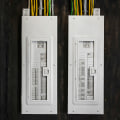
Thread gage accuracy plays an unexpectedly important role in residential electrical hardware, where mechanical reliability directly supports electrical safety. Although homeowners often think mostly about wiring, insulation, or breaker ratings, many failure pathways originate mechanically rather than electrically. When threaded connectors, mounting screws, conduit fittings, or panel hardware fall outside tolerance, the system can experience vibration, poor seating, thermal expansion misalignment, or gradual loosening. Each one of these mechanical issues can lead to arcing, oxidation, or heat buildup—conditions that create the potential for circuit failure or, in worst-case scenarios, residential fire. Accurate thread gaging therefore acts as a kind of silent safeguard, enabling electricians and installers to rely on standard torque values, expected fit, and predictable engagement between fastener and part.
Mechanical Fit, Friction, and Torque Control
One of the most immediate benefits of thread accuracy is the predictable fit it creates during installation. A slightly undersized thread increases friction and makes fasteners difficult to torque without over-tightening, stripping, or galling. A slightly oversized thread does the opposite—making it easy to tighten but too easy to loosen during thermal cycling or vibration. For electrical systems that expand as they heat under load and contract as they cool, gradual loosening can occur over months or years. When a fastener loses its clamping force, the bonded surfaces may develop micro-arcing or contact resistance, both of which degrade electrical efficiency and raise temperatures. Even in low-power or low-voltage residential settings, the cumulative impact of thermal cycling means that thread accuracy contributes directly to lifespan and reliability.
Standards, Codes, and Installation Repeatability
Regulatory frameworks and safety codes rarely mention thread gaging directly, but they implicitly assume mechanical uniformity. Torque specifications, connector seating depth, and tool compatibility all depend on standardized dimensions. When hardware adheres to established thread tolerances, electricians can work quickly without the trial-and-error that occurs when fasteners bind, seize, or misalign. In residential construction—where labor time is tightly constrained and hardware volumes are high—minor deviations quickly compound into rework costs, damaged components, or inspection failures. Thread accuracy therefore supports not only safety but also workflow efficiency across production, installation, and long-term service.
Materials, Corrosion, and Environmental Durability
Electrical hardware frequently mixes materials—steel screws into aluminum enclosures, brass threads into plated components, or stainless fasteners into outdoor boxes. Because different metals exhibit different coefficients of thermal expansion and corrosion behaviors, accurate threading allows them to seat firmly, minimizing micro-gaps where moisture or oxygen can intrude. These gaps are the birthplace of oxidation, pitting, and galvanic corrosion, all of which weaken hardware and shorten service life. In coastal, humid, or outdoor installations, environmental durability is one of the strongest arguments for thread gage precision.
Manufacturing Quality and the Calibration Ecosystem
Behind the scenes, manufacturing quality control relies on calibrated thread gages to verify production runs and reduce scrap, rework, and warranty claims. Companies that specialize in calibration and verification form a crucial part of the supply chain, ensuring fasteners and threaded parts conform to specification before reaching wholesalers or builders. Firms such as Thread Gage Calibration Services provide such assurance across industries, helping hardware manufacturers deliver consistent product to electricians and homeowners alike. Although invisible to end users, this ecosystem makes residential systems safer, cheaper, and more reliable over the long term.